3PL or your own warehouse: What does it cost for an online store?
- Read time
- 5 min
- Published
Whether a 3PL is cheaper than your own warehouse depends on how much of your capacity sits unused. With your own warehouse, you pay fixed costs regardless of volume. With a 3PL, you pay per order, per storage location and per parcel. The calculation comes down to your order volume, how much it fluctuates through the year, and what errors and your own time cost you today.
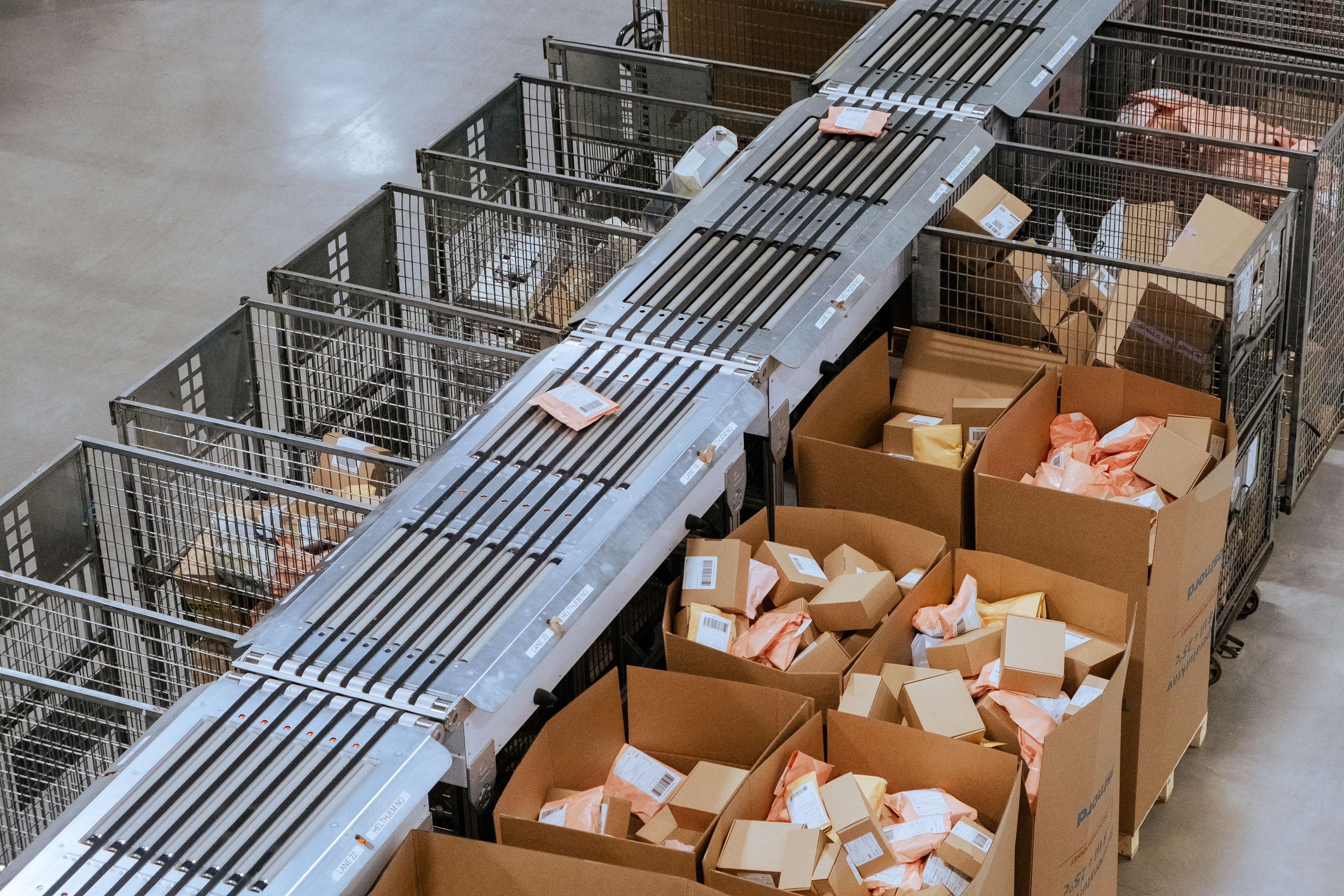
What your own warehouse costs
With your own warehouse, you pay for capacity whether you use it or not. Most of the costs are fixed and recur every month.
- Rent (fixed): The warehouse premises and the non-storage areas, such as a canteen, changing rooms and offices. On top of that come electricity, heating, insurance and maintenance.
- Staff (fixed): Salaries, payroll costs, holiday cover, sick leave and training.
- Equipment (investment): Shelving, forklifts, packing stations, scanners and printers.
- Systems (fixed): Warehouse management system, integration with your online store and shipping booking.
- Shipping (variable): Carrier agreements negotiated on your own volume.
- Your own time (hidden): Management, recruitment, supplier follow-up and problem-solving.
Rent covers more than the space where your goods are stored. You also pay for the canteen, changing rooms, offices and other shared areas your staff need. The premises must be large enough for your largest stock level of the year, not the average. The same often applies to staffing. Shipping rates depend on the volume you negotiate with. With low volume, your negotiating position is weaker.
What a 3PL costs
With a 3PL, you pay for what you use. Our pricing is built on four price drivers:
- Fulfillment: Goods receiving, picking and packing. The price depends on the number of orders and order lines per month, the type of products and any special packing requirements.
- Packaging: The price depends on the size of the packaging and whether the goods need reinforced packing.
- Storage: The price depends on the size of the products and how many items are stored.
- Shipping: The price depends on the carrier, the weight and dimensions of the parcel, and where it is going.
You can see what our pricing is made up of.
We calculate storage based on how much space your goods actually take up. Goods are stored in AutoStore bins measuring 60x40x30 cm. Each bin can be divided into up to 16 compartments. If your goods are in a compartment that is 1/16 of a bin, you pay 1/16 of the daily rate for a full bin. Storage is charged per day. From the day after a bin is emptied, you pay nothing for it. Read more about how you only pay for the space your goods use.
This means your costs follow your activity. When volume falls, costs fall. You don't pay for idle capacity.
The costs that don't appear on the invoice
Many people only compare rent and salaries with the invoice from a 3PL. That leaves out three items.
Picking errors and complaints. Every error costs a new shipment, a return and time in customer service. The customer may also not buy again. Count how many errors you have today, and what each one costs. Our error rate is below 0.1 percent, measured as errors we are responsible for divided by the number of outgoing orders.
Extra staff during peaks. Black Friday and Christmas require more people for a few weeks. With your own warehouse, you have to recruit, train and manage them yourself. New staff make more errors than experienced ones.
Time taken from sales and product development. The hours you spend running a warehouse can't be spent on purchasing, marketing and product development. Put a price on that time when you do the maths.
When does your own warehouse pay off, and when should you outsource logistics?
Your own warehouse can be the right choice when:
- Volume is high and steady throughout the year, so premises and staff are fully used.
- Your products need handling that a 3PL doesn't offer, such as very large or heavy items.
- Warehouse operations are part of what sets you apart from competitors.
It's time to consider a 3PL when:
- Growth means your warehouse will soon be too small, and the next step is investing in new premises, more equipment or automation.
- Volume fluctuates a lot, and you pay for capacity that sits unused for much of the year.
- Errors increase during peaks.
- You spend more time on the warehouse than on sales.
Already have a warehouse partner that isn't keeping up? Read how to switch 3PL after peak season.
In our experience, it becomes significantly cheaper for online stores that move from their own warehouse to a 3PL. You need fewer people. You don't pay for empty shelf space or idle capacity. Nor do you pay for a canteen, changing rooms and offices. One of our customers previously ran their own warehouse. After moving to us, their total monthly bill ended up roughly the same as what they used to pay in rent for the warehouse alone.
Want to compare for yourself? Add up all your warehouse costs for the last twelve months: rent, salaries, equipment, systems, shipping and errors. Divide the total by the number of orders. That gives you a cost per order you can compare with a quote. Get a quote you can compare with your own warehouse.